The ritual is timeless: You meet someone at a conference, networking event, or chance encounter. You reach into your pocket, pull out a paper business card, and hand it over. They glance at it politely, slip it into their wallet or bag, and the moment passes.
The outcome is also timeless: That card goes into a pocket, then gets tossed on a desk, buried in a drawer, run through a washing machine, or thrown directly into the trash. According to research by AdWeek, 88% of business cards handed out are thrown away within a week. The UK alone discards 7 million business cards every day.
In a digital world, paper is a "dead" format. It doesn't click, it doesn't play video, it doesn't update, and most importantly—it requires manual effort to extract value from. Enter the Digital Business Card, a modern solution that bridges the physical networking ritual with digital permanence.
What Is a Digital Business Card?
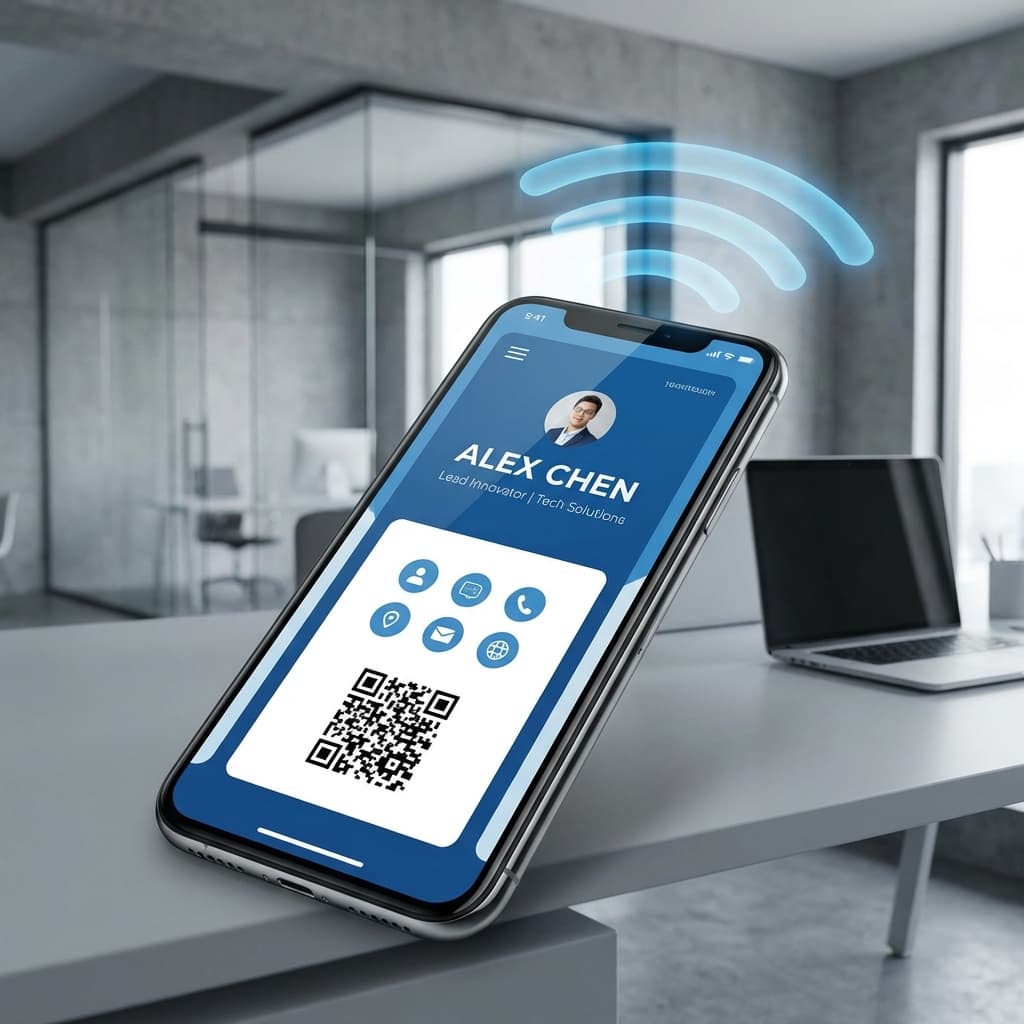
A digital business card typically takes the form of a premium physical card—often made of metal, wood, or high-quality PVC—with an embedded NFC (Near Field Communication) chip. When you tap this card to someone's smartphone, it instantly triggers a digital interaction: opening your contact information, website, portfolio, or custom landing page.
The Technology Behind It
The NFC chip inside the card stores a small amount of data—typically a URL that points to your digital profile. Modern smartphones (iPhone 7 and later, most Android devices) can read NFC tags natively, without requiring any special app.
The User Experience:
- You tap your card against someone's phone
- Their screen lights up with a notification
- One tap opens your digital profile
- They can save your contact info, view your portfolio, connect on social media, or book a meeting—all instantly
The entire interaction takes 3-5 seconds and requires zero manual data entry.
Types of Digital Business Cards
NFC Cards: Physical cards with embedded chips. These feel premium, work offline (the card itself doesn't need power), and provide a tangible networking moment.
QR Code Cards: Paper or plastic cards featuring a QR code. Less expensive than NFC, but require the recipient to open their camera app and scan—adding friction.
Virtual Only: Completely digital profiles shared via text, email, or messaging apps. No physical card at all. Lowest cost, but lacks the physical exchange ritual that creates memorable moments.
Smart Cards with Displays: Cutting-edge cards with e-ink displays that can switch between multiple profiles. Used by people who operate multiple businesses or want to customize information on the fly.
For most professionals, NFC cards offer the best balance of sophistication, functionality, and user experience.
Why Switch from Paper? The Compelling Case
1. It Actually Works: The Data Entry Problem
When you hand someone a paper card, you're essentially giving them homework. They must:
- Pull out their phone
- Open their contacts app
- Create a new contact
- Manually type your name (hoping they spell it correctly)
- Type your email address (high error rate)
- Type your phone number (also error-prone)
- Type your company name and title
- Optionally type your website
This process takes 2-3 minutes and requires focus. In the chaos of a networking event, this rarely happens. Instead, paper cards accumulate in pockets and bags, and the moment of connection is lost.
The Reality: Studies show that only 10-15% of paper business cards result in the contact information actually being saved to the recipient's phone or CRM. That means 85-90% of your networking efforts evaporate.
The Digital Solution: With an NFC card, the recipient taps their phone. A vCard (digital contact file) downloads automatically. They tap "Add to Contacts" and your information saves perfectly—correct spelling, accurate email, complete details—in under 5 seconds.
The conversion rate jumps to 70-80%. That's a 7x improvement in actual connection success.
2. Always Up-to-Date: The Flexibility Advantage
Life changes. You get promoted. You change companies. You get a new phone number. You pivot your business focus.
With Paper: You're now carrying business cards with outdated information. Your options:
- Cross out the old info and write in new details (unprofessional)
- Keep handing out wrong information (frustrating for recipients)
- Throw away hundreds or thousands of cards and reprint ($200-500 and 1-2 weeks wait time)
With Digital: You log into your digital business card platform, update your information, and click "Save." Every card you've ever distributed—even ones you handed out years ago—now points to your updated profile. The change is instant and universal.
This is transformative for:
- Real estate agents who change brokerages
- Consultants who shift specializations
- Entrepreneurs who launch new ventures
- Anyone who wants to A/B test messaging or offers
3. Rich Media: Beyond Text
A paper card can display text, maybe a small logo, and basic graphics. A digital profile is a multimedia experience.
What You Can Include:
Video Introduction: A 30-second video where you explain what you do, showcase your personality, and create an emotional connection. This is especially powerful for service professionals, speakers, and creatives.
Portfolio Gallery: Real estate agents can show current listings. Photographers can display their best work. Designers can showcase recent projects. The card becomes a portable portfolio.
Social Proof: Embed testimonials, client logos, case study highlights, or media mentions. Build credibility instantly.
Call-to-Action Links:
- Book a Meeting (Calendly integration—they can schedule time with you immediately)
- Download Your Lead Magnet (ebook, checklist, template)
- View Your Product Catalog
- Sign Up for Your Newsletter
- Connect on LinkedIn/Twitter/Instagram
- Message You on WhatsApp/SMS
Analytics: See who viewed your profile, when, and what links they clicked. This turns your business card from a static artifact into a data-generating asset.
4. Environmental Responsibility
Sustainability is no longer a nice-to-have—it's increasingly a business expectation, especially among younger demographics and progressive companies.
The Paper Problem:
- 27 million business cards are printed every day globally
- 88% are discarded within a week
- That's approximately 24 million cards in landfills daily
- Trees are cut, water is used, chemicals are employed, and transportation emissions are generated—all for cards that last less than a week
The Digital Solution: One digital business card lasts indefinitely. No reprinting. No waste. No environmental guilt.
For businesses with sustainability commitments or ESG reporting requirements, eliminating paper cards is a tangible, measurable environmental action. It's also a conversation starter: "We don't use paper cards because of our environmental values" signals your priorities immediately.
5. Professionalism and Differentiation
In a sea of paper rectangles, standing out matters.
The Physical Premium: A metal NFC card feels different. It has weight. It's distinctive. When you hand someone a sleek metal card in a networking environment full of cheap paper, you create an immediate impression: "This person invests in their professional presence."
The Technological Signal: Using NFC technology signals that you're:
- Forward-thinking and tech-savvy
- Invested in efficiency and user experience
- Serious about professional connections
- Environmentally conscious
- Likely successful enough to invest in premium tools
These are all positive associations created in seconds, before a conversation even begins.
The "Wow" Factor: The first time someone taps your card and sees their phone light up, they often verbally express surprise: "Whoa, that's cool!" or "I need one of these!" This moment of delight creates a memorable association with you and your brand.
6. Multi-Profile Versatility
Many professionals operate in multiple contexts: a day job and a side business, multiple ventures, or different brands. Carrying multiple sets of paper cards is cumbersome.
Some advanced NFC platforms allow you to encode different destinations based on:
- Time of day: Business profile during work hours, side hustle profile in evenings
- Device type: Different experience for iPhone vs. Android
- Tap count: First tap goes to main profile, second tap to special offer
For most users, the simpler solution is having multiple cards programmed with different profiles—still easier than managing multiple paper card inventories.
Choosing the Right Digital Business Card
The market has exploded with options. Here's how to evaluate:
Key Features to Consider
1. Compatibility: Ensure the card works with both iPhone and Android without requiring app downloads. The best solutions use NFC for smartphones and have a backup QR code for devices without NFC capability.
2. Profile Customization: Look for platforms that offer:
- Custom domain URLs (yourname.com instead of platform.com/yourname)
- Branded templates that match your visual identity
- Flexible layout options
- No platform branding (or ability to remove it)
3. Analytics and Tracking: Quality platforms provide:
- View counts (how many times your profile was accessed)
- Link click tracking (which CTAs are most effective)
- Geographic data (where are people viewing your profile)
- Device information (iOS vs. Android, browser types)
- Timestamps (when was your profile accessed)
4. Integrations: Modern solutions integrate with:
- CRM systems (automatically add contacts who view your profile)
- Email marketing platforms (add viewers to nurture sequences)
- Calendar systems (embed booking links)
- Social media (auto-follow functions)
- Payment processors (for coaches/consultants who want to offer immediate purchase options)
5. Ease of Updates: The platform should have an intuitive dashboard where you can update information in minutes, not a complex process requiring technical knowledge.
6. Card Quality: For physical cards, assess:
- Material (metal is most premium, PVC is more affordable, wood is eco-friendly)
- Thickness and weight (premium feel matters)
- Finish options (matte, glossy, brushed metal)
- Customization (can you add your logo, custom colors, unique design?)
Popular Platforms
Popl: Affordable, good mobile app, integrates with major CRM systems. Popular among sales professionals. Cards start around $10-15.
Mobilo: Enterprise-focused with robust analytics and team management features. Higher price point ($20-40 per card) but includes advanced features like lead scoring and Salesforce integration.
Linq: Sleek design, excellent user experience, strong social media integrations. Mid-range pricing ($15-25). Popular with creators and consultants.
Dot: Premium metal cards with lifetime profiles. One-time purchase model (no subscription). Cards are $70-100 but include lifetime access.
OVOU: Sustainable focus with wood and recycled material options. Appeals to environmentally conscious users. $20-35 per card.
Custom Development: For larger organizations, custom-branded solutions built on NFC technology can be developed, providing complete control over the experience and branding.
Price Considerations
Budget Option ($10-20 per card): PVC cards with basic NFC chips. Functional but not premium feeling. Good for testing the concept or high-volume distribution.
Mid-Range ($20-40 per card): High-quality PVC or entry-level metal cards with solid platform features, analytics, and customization. Best value for most professionals.
Premium ($40-100+ per card): Thick metal cards, custom designs, advanced materials (carbon fiber, wood, titanium). For executives, luxury brands, and those where the card itself is a branding statement.
Ongoing Costs: Some platforms charge monthly/annual fees ($5-15/month) for profile hosting, analytics, and updates. Others have one-time purchase models. Calculate total cost of ownership over 2-3 years.
Implementation Guide: Making the Switch
Step 1: Choose Your Platform
Based on your priorities (price, features, card quality, analytics), select a digital business card provider.
Decision Framework:
- Sales Professionals: Prioritize CRM integration and analytics
- Creatives: Prioritize portfolio display and customization
- Executives: Prioritize premium card quality and branding
- Entrepreneurs: Prioritize versatility and multi-profile capability
- Environmentalists: Prioritize sustainable materials
Step 2: Design Your Profile
This is your digital first impression. Invest time here.
Essential Elements:
- Professional headshot (smiling, high-quality, current)
- Clear headline (what you do, who you help)
- Contact methods (phone, email, and optionally social media)
- Primary call-to-action (what do you want them to do next?)
Advanced Elements:
- Video introduction (30-60 seconds)
- Portfolio or work samples
- Testimonials or social proof
- Company information and logo
- Secondary CTAs (newsletter signup, download resources)
Writing Tips:
- Keep it scannable (bullet points, short paragraphs)
- Focus on value to the recipient ("I help companies reduce costs by 30%") not just titles ("VP of Operations")
- Include personality (your profile should sound like you)
- Proofread obsessively (typos undermine professionalism)
Step 3: Order Your Cards
Most platforms let you customize:
- Card material and color
- Logo placement and size
- Text on the card (usually just name and company—the details live in the digital profile)
- QR code backup (recommended)
Pro Tip: Order a small batch first (10-20 cards) to test in real networking situations. Gather feedback, refine your digital profile, then order larger quantities.
Step 4: Practice Your Tap
The physical tap motion should be smooth and confident. Practice with friends or colleagues:
- Where on their phone to tap (usually top back edge for iPhones, center back for Android)
- How long to hold (1-2 seconds)
- What to say during the tap ("Let me share my info—tap right here")
Troubleshooting Tips:
- Ensure their phone is unlocked
- Remove thick cases (can block NFC signal)
- Try different positions if first attempt fails
- Have QR code backup visible on card for problem situations
Step 5: Integrate Into Your Routine
In-Person Networking: Replace paper cards entirely or carry both during transition period. Lead with digital: "Can I share my contact info with you? Just tap your phone here."
Follow-Up: Because your platform likely captures analytics, you can see who viewed your profile. Follow up specifically: "I noticed you checked out my profile—did you have any questions about [topic]?"
Email Signature: Include a link to your digital profile in your email signature: "View my digital card: [link]"
Social Media: Add your profile link to social media bios (LinkedIn, Twitter, Instagram).
Virtual Meetings: Share your profile link in Zoom chat or virtual event platforms.
Advanced Strategies for Maximum Impact
The Multi-Touch Approach
Don't rely solely on the in-person tap. Create multiple touchpoints:
Pre-Meeting: Send your digital profile link before scheduled meetings: "Looking forward to our conversation. Here's my info so we can connect: [link]"
Post-Meeting: Include your profile in follow-up emails: "Great chatting today. Stay in touch: [link]"
Content Marketing: Include your profile link in blog posts, articles, or guest content: "About the Author: [Your Name] [Link to Digital Card]"
Dynamic Content by Audience
Some platforms allow you to create multiple landing pages from one card. Use this for segmentation:
- Investors: Show growth metrics, cap table, pitch deck
- Customers: Show case studies, testimonials, booking link
- Partners: Show partnership opportunities, integration docs
- Media: Show press kit, high-res images, media mentions
Lead Magnets and Incentives
Drive profile views by offering value:
- "Tap my card to download my free [industry] guide"
- "Tap to access exclusive discount code"
- "Tap to join my private networking group"
Personal Branding Through Design
Your card and profile design should reinforce your brand:
Minimalist Professional: Clean typography, lots of white space, subtle colors, simple headshot.
Creative Maverick: Bold colors, unique materials (wood, copper), artistic photo, personality-driven copy.
Luxury Service Provider: Premium materials (thick metal), gold or rose gold accents, sophisticated aesthetic.
Tech Innovator: Sleek modern design, animated elements on profile, integration icons prominently displayed.
Common Objections and How to Overcome Them
"People expect paper cards"
True in some traditional industries, but expectations are shifting rapidly. You can carry both during transition and lead with digital: "I have a digital option that's really easy—can I share that? I also have paper if you prefer." Most people choose digital.
"What if their phone doesn't have NFC?"
Every NFC card should also have a QR code backup. If someone's phone can't read NFC (rare), they can scan the QR code instead.
"It feels impersonal"
Actually, the opposite is true. Your digital profile can showcase your personality, story, and values far better than a paper rectangle. The personalization comes from the content you create, not the medium.
"It's too expensive"
Calculate cost per meaningful connection, not cost per card. A $50 metal card that results in 3 new clients is infinitely more valuable than $50 spent on 500 paper cards that result in zero connections.
"I'm not tech-savvy"
Digital business card platforms are designed for non-technical users. If you can use Facebook, you can manage a digital business card profile. Most platforms offer customer support and tutorials.
"What if the company goes out of business?"
Choose providers with longevity or use services that allow you to export your data. Alternatively, use your own custom QR code that points to your personal website—then you control everything.
Measuring Success
Unlike paper cards, digital versions provide data. Track these metrics:
Engagement Rate
Total profile views ÷ cards distributed = engagement rate
Benchmark: 40-60% is typical. Lower suggests you're distributing to disinterested parties or your tap technique needs refinement.
Link Click-Through Rate
Clicks on specific CTAs ÷ total profile views = CTR
This tells you which calls-to-action resonate. A/B test different options:
- "Book a Call" vs. "Schedule a Demo"
- "Download Guide" vs. "Get Free Resource"
- "Connect on LinkedIn" vs. "Follow on Instagram"
Conversion Rate
Actual outcomes ÷ profile views = conversion rate
"Outcomes" depends on your goal: meetings booked, newsletter signups, quotes requested, sales made.
Benchmark: 10-20% conversion from profile view to desired action is strong.
ROI Calculation
Track closed business that originated from digital card connections:
(Revenue from card-sourced clients - Cost of card and platform) ÷ Cost = ROI
Example: You spend $200 on cards and platform fees. You close one client worth $5,000 who you met via business card exchange. ROI = ($5,000 - $200) ÷ $200 = 2,400% return
The Future of Digital Business Cards
The technology continues to evolve:
AR Integration: Point your phone at a card and see a 3D hologram of the person giving their pitch or product demo.
Blockchain Verification: Cryptographically verified identity to prevent impersonation and fraud.
Wearable Integration: NFC chips embedded in watches, rings, or bracelets for cardless sharing.
AI-Powered Follow-Up: Automated but personalized follow-up sequences triggered when someone views your profile, customized based on their engagement patterns.
Virtual Reality Business Cards: In metaverse and VR platforms, digital business cards become 3D interactive environments.
Industry-Specific Applications
Real Estate Agents
Card Use Case: At open houses, hand your NFC card to visitors. They tap and instantly see:
- Your current listings with virtual tours
- Testimonials from recent buyers/sellers
- Home valuation tool
- Booking link for consultations
- Mortgage calculator
Impact: Convert casual open house visitors into qualified leads automatically.
Consultants and Coaches
Card Use Case: After speaking engagements or networking events, distribute your card. Profile includes:
- Video testimonials from clients
- Case study results
- Direct booking link for discovery calls
- Free resource download (builds email list)
- Pricing and service packages
Impact: Shorten sales cycle by providing social proof and easy booking immediately.
Sales Professionals
Card Use Case: After trade shows or client meetings, share your card. Profile includes:
- Product demo videos
- ROI calculator
- Customer success stories
- Direct line to you (click-to-call)
- CRM integration (automatically adds them to your follow-up sequence)
Impact: Increase conversion rates and reduce sales cycle length.
Creatives (Photographers, Designers, Artists)
Card Use Case: At exhibitions, client meetings, or networking events, share your card. Profile is essentially a portfolio:
- Gallery of your best work
- Client testimonials
- Pricing packages
- Booking calendar
- Social media feeds
Impact: Eliminate the need for physical portfolios while showcasing work beautifully.
Conclusion: Networking in the Digital Age
The business card hasn't died—it has evolved. The fundamental human need for connection remains constant, but the tools we use must adapt to modern expectations of speed, convenience, and digital integration.
A digital business card isn't about replacing human interaction with technology. It's about removing friction from professional relationships so that the meaningful connection—the conversation, the collaboration, the business opportunity—can flourish without administrative obstacles.
When you hand someone a paper card, you're giving them a task. When you tap their phone with an NFC card, you're giving them immediate value. The difference is profound.
In a world where first impressions matter more than ever and attention is the scarcest resource, ensuring that your contact information doesn't just get handed over but actually gets saved and remembered is worth the investment.
Your network is your net worth, as the saying goes. A digital business card ensures that network is captured, maintained, and accessible—not lost in a drawer with hundreds of forgotten paper rectangles.
The question isn't whether to upgrade to a digital business card. It's whether you can afford not to.
Make the switch. Your future connections—and the opportunities they create—will thank you.