Every gym owner knows the scene: 6:00 AM, peak morning rush. A line forms at the front desk. Members fumble through wallets and keychains searching for their membership card. Some forgot theirs at home. Others have a damaged barcode that won't scan. The staff member manually looks up accounts while the line grows longer. Frustration mounts on both sides of the desk.
This daily friction point—the gym check-in process—creates a negative first impression that undermines everything else you do right. Members who rushed to make their 6:15 spin class now arrive late and annoyed, all because of an outdated access system.
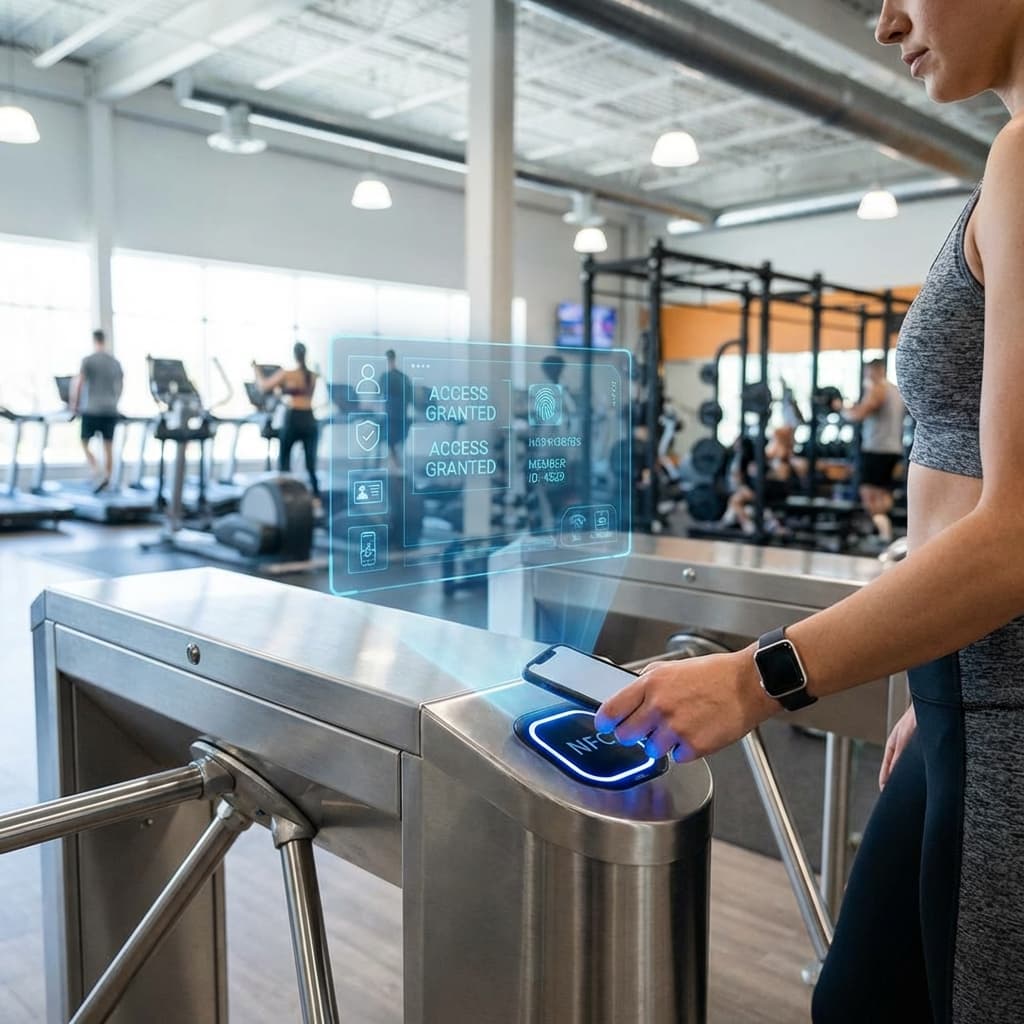
The solution isn't newer barcode scanners or sturdier key fobs. It's eliminating the friction entirely through NFC (Near Field Communication) technology. With NFC-enabled check-ins, members tap their smartphone, smartwatch, or NFC membership card against a reader and they're in—no fumbling, no forgetting, no frustration.
The Problem with Traditional Gym Access Systems
Before exploring the NFC solution, let's understand why traditional systems create so much friction.
Physical Key Fobs: The Lost and Forgotten
The classic gym key fob seemed like a good idea in the 1990s. Attach it to your keyring, scan it at the door, you're in. Simple.
The Reality:
- Forgotten at Home: Members regularly leave their gym fob at home, requiring staff to manually verify membership and grant access—slowing down the entire process.
- Lost Fobs: Members lose fobs constantly. Replacement requires admin work (deactivating old fob, programming new one, charging replacement fee), creating negative member experiences.
- Damaged Fobs: Physical wear destroys RFID chips over time. Cracked plastic, water damage, and general abuse render them unreadable.
- Sharing and Theft: Fobs are easily shared, allowing unauthorized access. A canceled member can hand their fob to a friend indefinitely.
- Costly Replacement: Quality RFID fobs cost $2-5 each, plus programming time. With hundreds or thousands of members and typical annual replacement rates of 30-40%, costs accumulate quickly.
Barcode Membership Cards: Paper Problems
Some gyms issue plastic or paper membership cards with barcodes.
The Issues:
- Wallet Bulk: Members resist carrying yet another card. The rise of digital wallets (Apple Pay, Google Pay) has conditioned consumers to expect phone-based solutions.
- Barcode Degradation: Printed barcodes fade, scratch, or smudge, becoming unscannable within months.
- Scanning Friction: Barcodes require proper orientation, distance, and lighting. Members must hold the card steady while staff aim the scanner—a surprisingly finicky process during busy periods.
- Paper Cards: Budget gyms using paper cards face even worse durability. Cards get wet, torn, or washed in pockets.
Manual Check-ins: The Staffing Burden
When technology fails, staff resort to manual processes:
- Looking up member accounts by name or phone number
- Verifying photo ID
- Manually marking attendance
This is slow, error-prone, and requires staffed front desks during all operating hours—a significant labor cost, especially for 24-hour facilities.
The Data Problem
Beyond member frustration, traditional systems provide poor data:
- Limited Analytics: RFID fobs and barcodes typically only record that someone checked in, with no additional context.
- No Real-Time Insights: Owners can't see live facility utilization or predict crowding patterns effectively.
- Difficult Integration: Legacy access systems rarely integrate with modern gym management software, requiring duplicate data entry.
The NFC Solution: How It Works
NFC technology transforms gym check-in from a friction point to an invisible, delightful experience.
What Is NFC?
NFC (Near Field Communication) is a wireless technology that enables data exchange between devices within a few centimeters. It's the technology behind contactless payments (Apple Pay, Google Pay), transit cards in major cities, and increasingly, access control systems.
Key Characteristics:
- Range: Works within 4-10 cm (1.5-4 inches)
- Speed: Connection established in under 0.1 seconds
- Security: Short range makes interception extremely difficult
- No App Required: Modern smartphones (iPhone 7 and later, most Android devices) read NFC tags natively
- No Internet Required: NFC chips work offline; the reader validates credentials locally
The Member Experience
Traditional Check-in:
- Arrive at gym
- Search pocket/bag for fob or card
- Wait in line if busy
- Hand card to staff or scan at reader
- Wait for system to verify
- Proceed to facility
- Total Time: 30 seconds to 3+ minutes depending on crowding
NFC Check-in:
- Arrive at gym
- Pull out phone (already in hand for most people)
- Tap phone against NFC reader
- Instant verification and access
- Total Time: 3-5 seconds
The difference is transformative during peak hours.
Implementation Options
Gyms can implement NFC check-ins in three ways, often using a combination:
Option 1: NFC Membership Cards
Physical cards with embedded NFC chips. These look and feel like credit cards but contain programmable NFC tags.
Pros:
- Familiar format for members accustomed to physical cards
- No requirement for members to have smartphones
- Can include printed information (emergency contacts, gym rules, QR code backup)
- Relatively inexpensive ($1-3 per card in bulk)
Cons:
- Still a physical item members can forget or lose
- Replacement logistics still required
- Less environmentally friendly than phone-based solutions
Best For:
- Gyms with older demographics less comfortable with smartphone-only solutions
- Facilities requiring backup options for members without smartphones
- Transition period while phasing out old systems
Option 2: Smartphone NFC (Apple Wallet / Google Pay)
Members add their gym membership to their digital wallet (Apple Wallet on iPhone, Google Pay on Android). Their phone becomes their membership card.
Pros:
- Members virtually never forget their phones
- Zero physical cards to print, distribute, or replace
- Instant membership activation (new members get access immediately via email/SMS)
- Remote deactivation when memberships lapse or cancel
- Updates automatically (membership tier changes reflect instantly)
- Eco-friendly (zero plastic waste)
Cons:
- Requires smartphone ownership (penetration is 85%+ in most developed markets, higher in gym demographics)
- Initial setup may confuse less tech-savvy members (requires onboarding support)
- Phone battery death creates access issues (though rare, and backup manual processes can address)
Best For:
- Modern gyms targeting tech-savvy demographics
- Facilities prioritizing operational efficiency and environmental responsibility
- Gyms wanting to eliminate physical card logistics entirely
Option 3: Wearable Devices
Many fitness wearables (Apple Watch, Samsung Galaxy Watch, Fitbit, Garmin, etc.) support NFC.
Pros:
- Ultimate convenience—members check in with the device already on their wrist
- Enhances the "tech-forward fitness" brand positioning
- Integrates with workout tracking (some systems can automatically log workouts when members check in)
Cons:
- Wearable ownership is lower than smartphone ownership
- Not a standalone solution (requires phone-based option as primary method)
Best For:
- Premium fitness facilities
- Gyms emphasizing technology integration and member data tracking
- Supplement to smartphone-based check-in (not primary method)
Implementation Guide: Step-by-Step
Transitioning to NFC check-ins requires planning, but the process is straightforward.
Step 1: Choose Your NFC Hardware
The physical NFC reader is your gateway to the system.
Reader Types:
Fixed Turnstile Readers: Mounted on or near entry turnstiles. Members tap to unlock.
- Cost: $200-800 per reader depending on features
- Best For: Controlled entry/exit facilities with physical turnstiles
- Features to Consider: Weatherproofing (for outdoor installations), LED feedback lights, audio confirmation, durability rating
Standalone Tablet Readers: iPad or Android tablet with NFC capability running check-in software.
- Cost: $300-600 (tablet + software)
- Best For: Staffed front desks, facilities without turnstiles
- Pros: Flexible, allows staff to also process payments and account changes on same device
- Cons: Requires staff presence, members can walk past without checking in
Wall-Mounted Readers: Dedicated NFC readers mounted near entrances.
- Cost: $150-500 per unit
- Best For: Unstaffed 24-hour facilities, secondary entrances
- Features to Consider: Integration with door locks, battery backup, vandal-resistant casing
Key Criteria:
- Compatibility: Ensure it works with both NFC cards and smartphone wallets (NTAG, MIFARE, FeliCa standards)
- Integration: Must connect to your gym management software (cloud-based systems are easiest)
- Durability: Gym environments are tough—spilled water bottles, heavy bags, high traffic. Choose commercial-grade equipment.
- Speed: Read time should be under 0.5 seconds to avoid member frustration
Step 2: Integrate with Gym Management Software
Your NFC readers must communicate with your gym management system to verify memberships.
Popular Gym Management Platforms with NFC Support:
- Mindbody: Industry leader, robust API, supports NFC check-ins via integrations
- Zen Planner: Strong NFC integration, good for mid-size facilities
- Glofox: Mobile-first platform with built-in NFC support
- Wodify: Popular in CrossFit gyms, NFC-compatible
- Pike13: Great for boutique studios, supports NFC check-ins
- ClubReady: Enterprise-grade, full NFC turnstile integration
Integration Requirements:
- Real-Time Sync: Member status must update instantly (membership lapses, freezes, cancellations immediately revoke access)
- API Access: Cloud-based APIs allow NFC readers to query membership status on every tap
- Offline Capability: System should cache member credentials locally in case of internet outage (security permitting)
- Reporting: Check-in data must flow into your management system for attendance tracking and analytics
Custom Development: Larger gym chains may opt for custom integration. This requires:
- Developer Resources: In-house or contracted developers familiar with NFC protocols
- API Documentation: Access to your gym software's API
- Testing Environment: Sandbox environment to test before live deployment
- Cost: $5,000-25,000 depending on complexity
Step 3: Member Enrollment
Getting members' NFC credentials into the system is critical.
For NFC Card Distribution:
- Pre-Program Cards: Load member IDs onto NFC cards before distribution
- Distribution Event: Host "new card pickup" events with staff available to help
- Gradual Rollout: Distribute to active members first, new members going forward
- Old System Parallel: Keep old system running for 30-60 days during transition
- Communication: Email, app notifications, and signage explaining the change
For Smartphone Wallet Enrollment:
- Automated Delivery: Email or SMS members a secure link to add membership to Apple Wallet or Google Pay
- In-App Addition: If you have a gym app, build "Add to Wallet" functionality directly into the app
- Staff Assistance: Train front desk staff to help members add credentials during visit
- Instructional Content: Create short video tutorials for both iOS and Android users
- Incentivize Enrollment: Offer small perks (free guest pass, raffle entry) for members who complete enrollment
Best Practice: Implement both card and smartphone options. Most members will prefer smartphone, but having cards available ensures no one is excluded.
Step 4: Train Staff
Your team must understand the new system and be able to assist members.
Training Topics:
- How to Add Credentials: Walk staff through adding memberships to Apple Wallet and Google Pay so they can help members
- Troubleshooting: What to do when a tap doesn't work (check phone NFC settings, ensure phone is unlocked, try different position)
- Manual Override: Backup process when technology fails (manual lookup and entry)
- System Dashboard: How to view real-time check-ins and facility capacity
- FAQs: Prepare staff for common member questions (security, privacy, forgotten phone scenarios)
Ongoing Support: Designate one staff member as the "NFC champion" who becomes the expert and helps train others.
Step 5: Launch and Monitor
Go live with communication, monitoring, and continuous improvement.
Launch Communication:
- Email Campaign: Series of emails explaining benefits, how-to instructions, FAQs
- In-Gym Signage: Posters and table tents explaining the new system
- Demo Station: Temporary help desk where members can get hands-on assistance
- Social Media: Announce the upgrade, position it as a member benefit
- Website Update: Add NFC check-in to your "Why Join" marketing pages
Monitoring Metrics:
- Adoption Rate: What percentage of members are using NFC vs. old system?
- Check-in Speed: Average time per check-in (should decrease significantly)
- Support Requests: Track common issues to identify training or system gaps
- Member Feedback: Survey members about the experience
Iteration: Based on data, adjust:
- Reader Placement: If members bunch up, add readers or reposition existing ones
- Signage: If confusion persists, improve instructional signage
- Backup Options: If certain member segments struggle, maintain alternative access methods
Benefits Beyond Convenience
NFC check-ins deliver value far beyond faster entry.
1. Enhanced Data and Analytics
Traditional systems tell you if someone checked in. NFC systems tell you much more.
Real-Time Facility Utilization: See exactly how many members are in the facility at any moment. This enables:
- Dynamic Staffing: Schedule trainers and staff based on actual traffic patterns, not guesses
- Class Capacity Management: Know when group classes are approaching capacity and waitlist accordingly
- Equipment Planning: Identify peak usage times to optimize equipment purchases and layout
Traffic Pattern Analysis: Analyze check-in data over time to identify:
- Peak Hours: Optimize staffing, class schedules, and promotions around actual usage
- Underutilized Times: Create "off-peak" discounts or programming to balance facility usage
- Member Behavior Trends: Identify members whose attendance is dropping (churn risk) and proactively engage them
Member Segmentation: Classify members by behavior:
- High-Frequency Users: 4+ visits per week (brand advocates, retention focus)
- Moderate Users: 2-3 visits per week (encourage increased usage)
- Low-Frequency Users: 0-1 visits per week (high churn risk, intervention needed)
Retention Predictors: Research shows gym attendance is the strongest predictor of retention. Members who check in fewer than 2x per week have dramatically higher cancellation rates. NFC check-in data allows you to identify at-risk members early and intervene with:
- Personalized outreach: "We noticed you haven't been in much—how can we help?"
- Complimentary personal training sessions: Re-engage dormant members
- Program recommendations: Suggest classes or amenities that might increase engagement
2. Improved Security
NFC systems are significantly more secure than key fobs or barcodes.
Instant Deactivation: When a membership cancels, their access is revoked immediately—no need to collect physical fobs or worry about shared cards. The next time they attempt to check in, access is denied.
Reduced Sharing: While people freely lend gym fobs to friends, they're far less likely to hand over their smartphone. This reduces unauthorized facility usage.
Audit Trail: Every check-in is logged with timestamp and member ID. If equipment goes missing or incidents occur, you have detailed records of who was present.
Biometric Integration: Advanced implementations can require biometric verification (Face ID, fingerprint) before the phone's NFC credential activates, adding an additional security layer.
Guest Management: Issue temporary NFC credentials to guest pass users that automatically expire after a set number of uses or time period. No physical guest passes to track or collect.
3. Operational Efficiency
NFC streamlines operations in multiple ways.
Reduced Admin Burden: Eliminate tasks like:
- Programming new key fobs
- Replacing lost or damaged cards
- Maintaining inventory of physical credentials
- Manual check-in lookups
Faster Onboarding: New members can be activated instantly. Complete signup online, receive NFC credential via email, check in the same day. No need to visit the front desk to pick up a card.
Automated Reporting: Check-in data flows automatically into your management system, populating reports without manual data entry. Generate attendance reports, peak usage analysis, and member activity summaries with a few clicks.
Staff Reallocation: Front desk staff spend less time managing check-ins and more time on high-value activities:
- Member relationship building
- Sales (new memberships, personal training, retail)
- Facility upkeep and member assistance
24-Hour Unmanned Access: NFC check-ins enable true 24/7 access without staffing costs. Members check in via NFC reader connected to electronic door locks. No staff required.
4. Enhanced Member Experience
Happy members stay longer and refer more.
Frictionless Entry: Removing the "forgot my card" frustration improves member satisfaction. Speed and convenience create positive brand associations.
Perceived Modernity: Using smartphone-based check-ins signals that your gym is forward-thinking and tech-savvy. This appeals especially to younger demographics (18-35) who expect digital-first experiences.
Seamless Integration: Members appreciate when their gym membership lives alongside their payment cards, boarding passes, and event tickets in their digital wallet. It's one less physical item to manage.
Family and Multi-Location Benefits: Family memberships can issue separate NFC credentials to each family member, providing individual tracking and accountability. Multi-location gym chains allow members to check in at any location with the same credential.
5. Marketing and Branding Opportunities
NFC credentials can extend beyond access control.
Smart Wallet Messaging: Apple Wallet and Google Pay support push notifications. Send timely messages directly to members' wallets:
- Class Reminders: "Your spin class starts in 30 minutes"
- Promotions: "20% off smoothies today—show this message at checkout"
- Milestone Celebrations: "Congrats on your 100th check-in! Enjoy a free guest pass"
- Re-Engagement: "We miss you! Come back this week and get a free session with a trainer"
Branding in Digital Wallets: Your gym's logo and branding appear in members' wallets every time they open their phone—passive brand reinforcement.
Referral Programs: Integrate referral tracking into NFC check-ins. When a member brings a guest, track it via guest NFC credentials and automatically reward the referrer.
Cost Analysis: Is NFC Worth It?
Let's examine the financials for a mid-size gym with 500 members.
Initial Investment
Hardware:
- 2 NFC readers (main entrance + secondary door): $600-1,200
- Installation and wiring: $200-500
- Backup tablet reader: $400
Total Hardware: $1,200-2,100
Software Integration:
- If using existing gym management software with NFC support: $0-500 setup fee
- If custom development needed: $5,000-15,000
- Monthly software fees: Usually included in existing gym management software subscription
Total Software: $0-15,500
Member Credentials:
- Option A (NFC cards): 500 cards x $2 = $1,000
- Option B (Smartphone wallets): $0 (digital delivery)
Total Credentials: $0-1,000
Training and Transition:
- Staff training: $500
- Member communication and support: $300
Total Training: $800
Grand Total Initial Investment: $2,000-19,400
For most gyms using existing software platforms with NFC compatibility (Mindbody, Zen Planner, etc.), expect $2,000-5,000 total investment.
Ongoing Costs
Monthly:
- Software fees (usually bundled with existing gym management software): $0-50
- Credential replacements (lost phones/cards): $50-100/month
- Total: $50-150/month
Cost Savings
Staff Time: Assume front desk staff spend 5 hours/week managing check-in issues (looking up accounts, programming fobs, handling "forgot my card" situations):
- 5 hours/week x $15/hour x 52 weeks = $3,900/year saved
Fob Replacement: Traditional system with 30% annual fob replacement rate:
- 500 members x 30% x $3 fob cost = $450/year saved
Improved Retention: If NFC check-in data enables better member engagement and reduces churn by just 2% annually:
- 500 members x 2% retention improvement = 10 fewer cancellations
- 10 members x $50 average monthly dues x 12 months = $6,000/year additional revenue
Total Annual Benefit: $10,350
Payback Period: Even with a $5,000 initial investment, payback occurs in 5-6 months. After that, it's pure benefit.
ROI Beyond Direct Costs
Less Quantifiable But Valuable:
- Improved member satisfaction (harder to measure but impacts retention and referrals)
- Brand perception as modern and tech-forward (attracts new members)
- Data-driven decision making (optimizes operations, programming, and marketing)
- Staff morale improvement (less time on frustrating admin tasks)
Common Implementation Challenges and Solutions
Challenge 1: Member Resistance to Change
Some members are comfortable with the old system and resistant to new technology.
Solution:
- Gradual Transition: Keep old system running in parallel for 30-60 days
- Opt-In First: Let early adopters use NFC while others continue with fobs
- Staff Support: Have knowledgeable staff available to help during peak hours
- Clear Communication: Emphasize benefits (faster, more convenient, eco-friendly)
- Backup Options: Maintain manual check-in process for edge cases
Challenge 2: Smartphone Compatibility Issues
Not all phones support NFC, and some members have NFC disabled.
Solution:
- Pre-Launch Testing: Test with various phone models (iPhone, Samsung, Google Pixel, etc.)
- Clear Instructions: Provide device-specific setup guides
- Alternative Options: Offer NFC cards for members without compatible phones
- Troubleshooting Guide: Create visual guides for enabling NFC in phone settings
Challenge 3: Network Reliability
Check-ins fail if internet connectivity drops and the system can't verify membership status.
Solution:
- Local Caching: Implement systems that cache active member credentials locally on the reader
- Offline Mode: Readers should default to allowing access during internet outages (security permitting) rather than denying everyone entry
- Redundant Internet: Consider backup internet connections (cellular failover) for critical access points
- Status Monitoring: Implement alerts that notify staff immediately when connectivity issues occur
Challenge 4: Privacy Concerns
Some members worry about tracking and data privacy.
Solution:
- Transparency: Clearly communicate what data is collected (check-in times and member ID only)
- Privacy Policy: Update policies to address NFC data usage
- Opt-Out Options: Allow privacy-conscious members to use NFC cards instead of smartphones (less data collected)
- Data Security: Explain encryption and security measures protecting their information
Challenge 5: Cost Justification
Ownership or management questions the ROI of the investment.
Solution:
- Pilot Program: Implement in one location or for one membership tier to demonstrate value before full rollout
- Competitive Analysis: Show competitor adoption of NFC systems
- Member Surveys: Demonstrate member demand for modern check-in solutions
- Detailed ROI Projection: Use the cost analysis framework above with your actual numbers
Future Trends: Where NFC Check-ins Are Heading
The technology continues to evolve, opening new possibilities.
Integration with Workout Tracking
Imagine checking in at an NFC reader, then tapping equipment NFC tags throughout your workout. The system automatically logs:
- Which machines you used
- Duration on each
- Estimated calories burned
- Workout completion
This data flows into member apps, creating comprehensive fitness tracking without manual entry.
Personalized Facility Experience
Based on check-in data and preferences, the facility automatically adjusts:
- Lighting and Music: Your preferred playlist starts in your section of the gym
- Equipment Reservations: Tap to reserve your favorite treadmill or squat rack
- Trainer Notifications: Your personal trainer receives an alert when you check in for your session
Contactless Payments Integration
Use the same NFC credential for check-ins and purchases:
- Tap to buy smoothies, supplements, or merchandise
- Charge directly to membership account
- Completely cashless facility experience
Health Screening Integration
Post-pandemic, some facilities implement health screening at entry. NFC check-ins can integrate with:
- Temperature screening (automated thermal cameras)
- Health questionnaires (completed on phone, verified at check-in)
- Vaccination or health status verification (where required)
Gamification and Challenges
NFC check-ins enable sophisticated engagement programs:
- Streak Tracking: "You've checked in 30 days in a row—keep it going!"
- Leaderboards: Friendly competition among members for most check-ins
- Rewards Programs: Earn points for every check-in, redeemable for perks
- Social Sharing: Auto-post workout check-ins to social media (opt-in)
Conclusion: The Future of Gym Access Is Frictionless
The gym check-in process should be invisible. Members should go from parking lot to workout floor without breaking stride, without fumbling for cards, without waiting in lines.
NFC technology makes this vision real. It's not about adding complexity—it's about removing it. The technology fades into the background while the experience improves dramatically.
For gym owners, the benefits extend far beyond convenience. Better data enables smarter business decisions. Improved security reduces liability. Operational efficiency cuts costs. Enhanced member experience drives retention and referrals.
The question isn't whether to implement NFC check-ins. It's whether you can afford to keep frustrating your members with outdated access systems while competitors modernize.
The initial investment is modest, the payback period is short, and the long-term value—both financial and experiential—is substantial.
Make check-ins forgettable in the best way possible: so smooth and effortless that members never think about them at all. Their energy should be focused on their workout, not wrestling with a barcode scanner.
Welcome to frictionless fitness. Your members will thank you with their loyalty, and your bottom line will thank you with improved retention and operational efficiency.
The future of gym access isn't physical cards or fobs. It's already in your members' pockets—their smartphones. All you need to do is tap into it.